
How we got here
It started in 2012 with one person who wanted to make a T-shirt. What followed was a decade of getting it wrong in almost every way it is possible to get it wrong.
· 5 min read · Minimalistic Garments · Story
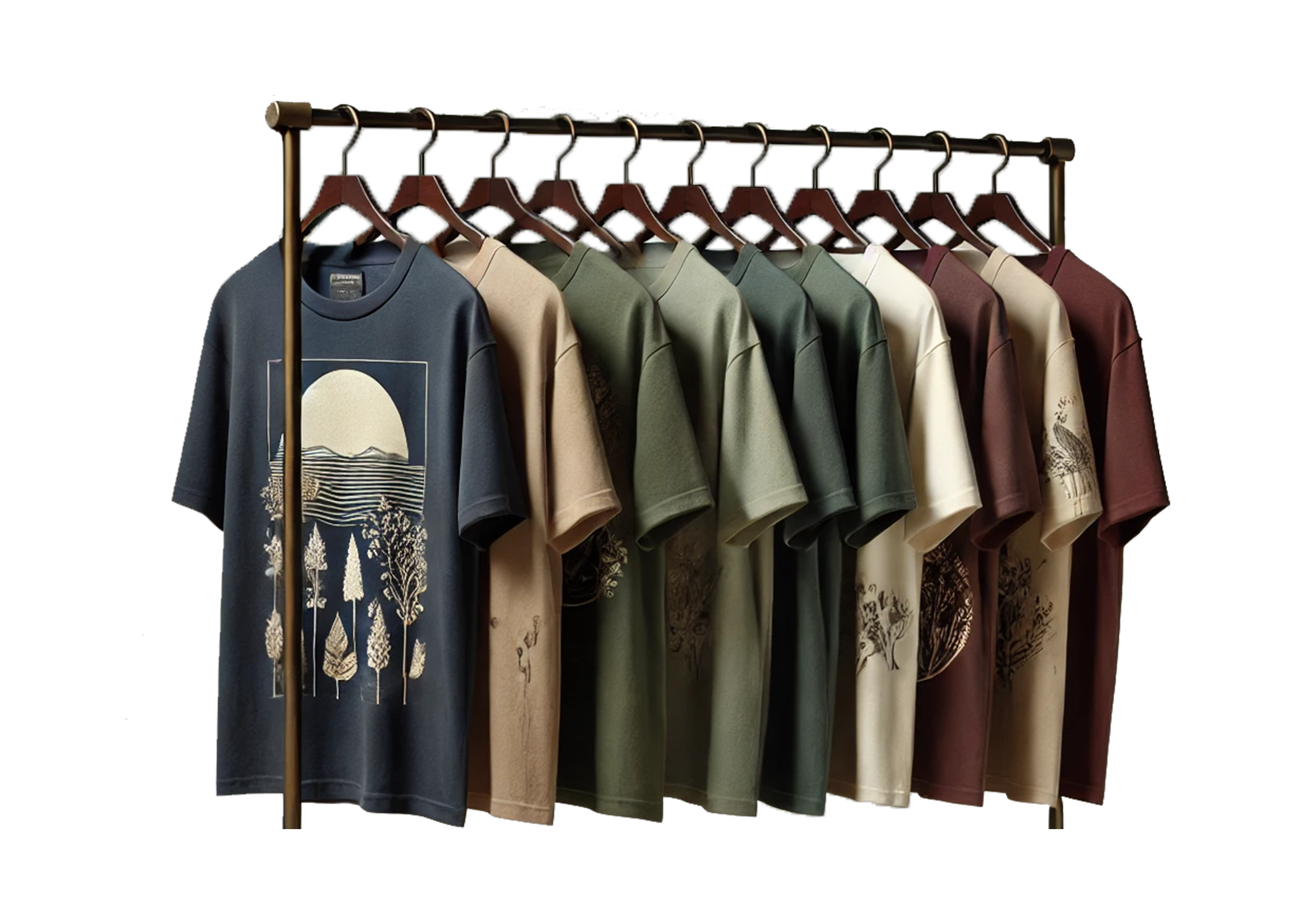
Most manufacturing companies tell their origin story as though it were a plan. Ours was not a plan. It was one person in 2012 who wanted to make a T-shirt, and then a decade of finding out how much he did not know.
This is the honest version, because the polished version would not explain why we work the way we do now.
The first mistake was thinking the hard part was design
Karna went to NIFT. He could draw a garment, spec a garment, and tell you why one hung better than another. So the assumption was that the difficult bit — the creative bit — was already handled, and production was just a matter of finding someone to do it.
That is a very common assumption, and it is completely wrong.
Design is maybe a fifth of the problem. The rest is whether the thing that arrives in the box matches the thing you approved, four months after you approved it, at a price that has not quietly moved, on a date somebody actually committed to. Nothing at NIFT prepares you for that, because it is not a design problem. It is an operations problem.
Then came the manufacturers
The early years were spent doing what every small brand does: finding a factory, placing an order, and hoping.
Some of them were fine. Several were not. Orders came back with the wrong fabric weight. Colours drifted between batches, so the second run did not match the first and there was no way to explain that to a customer. Dates slipped by weeks, and the slippage was always communicated after the date had already passed. One unit we depended on shut down entirely, mid-order.
The thing nobody tells you is that when the factory gets it wrong, your customer does not blame the factory. They have never heard of the factory. They blame you. You are the name on the label.
We ate a lot of failed batches in those years. Money that had already been spent, on garments that could not be sold.
What we learned from being on the wrong end of it
Every one of those failures taught us something specific, and every one of those lessons is now a rule here.
Wrong fabric arriving? That is why we specify GSM and fit in writing before anything is cut, and why we make a pre-production sample you sign off on rather than describing it and hoping we understood each other.
Colour drifting between runs? That is why quality gets checked at three stages rather than once at the end.
Dates slipping silently? That is the reason Saarvik exists at all. Every order moves through it stage by stage, so when you ask where yours is, the answer is a stage rather than a guess.
We did not arrive at these as best practices from a manual. We arrived at them because we had been the brand on the wrong end of each one.
The bedroom years
Then 2020 happened, and like everyone else we had to work out what was left.
Production ran out of a bedroom for a stretch. Not as a charming startup anecdote — as the only option available. The scale collapsed, the plans went in a drawer, and the question stopped being "how do we grow this" and became "does this survive at all".
It is a strange thing to be grateful for, but that period settled something. When you have made garments on a domestic floor with almost nothing, you stop believing that scale is what makes quality possible. A large unit can be careless. A small one can be exact. The size is not the variable — the attention is.
Rebuilding, more times than we would like to admit
The pattern of the last decade has been: build something, watch a part of it fail, rebuild it better.
We rebuilt after bad manufacturing partners by bringing the work in-house. We rebuilt after a unit closed on us by making sure we were never dependent on someone else's queue again. We rebuilt after COVID from almost nothing.
Today everything happens on our own floor in Ghatkopar East: cutting, stitching, printing, finishing, packing. Around six thousand garments a month, made by seventeen people, with Umesh — thirty years of pattern cutting — catching fit problems before they become three hundred identically wrong garments.
Mamta, who was a financial advisor at CIBC in Canada before any of this, runs the side of the business that decides whether the numbers actually work. Viraj built Saarvik. Raj has been printing garments for twenty years.
Why the minimum is thirty
This is the part of the story that matters most to anyone reading this who is thinking about their first drop.
Our minimum order is thirty pieces. That is unusually low, and we get asked why fairly often, because thirty pieces is not where the money is.
The answer is that we remember being the brand with an idea, no track record, and not enough capital to gamble on five hundred units to find out whether anyone wanted it. Nearly every brand we now produce in the thousands for started somewhere very close to thirty. A low minimum is the difference between finding out cheaply and not finding out at all.
What the phrase actually means
"Crafted, not manufactured" reads like a slogan, and we are aware of that. What it means concretely is that the failures above cost us enough that we built the company specifically so they cannot repeat.
Nothing leaves the building for a third party to handle. Quality is checked three times. Costs are itemised before you commit. The date you are given is the date you are given.
Six thousand garments a month now — but we still check them like we are making one, because we can remember what it felt like when somebody did not.